NEW MEMBER OFFER: 1 week UNLIMITED CLASSES for $39

One lift for each movement pattern, the cues coaches use, how to choose your weights with RIR, and a 3-day full-body plan you can start this week.
Book your first classYou want to get stronger, you have about three hours a week, and every program online has 14 exercises a day. The short answer: pick one solid exercise for each of six movement patterns (squat, hinge, push, pull, single-leg and carry), train them across three full-body sessions a week, and add a little weight or a rep whenever the last set feels easier than it did before.
The rest of this guide covers how to do that well: what a coach would cue on each lift, how to pick weights without guessing, and a 3-day plan.
Train each of these six patterns and you've covered every major muscle group, with no need for a separate "arm day". It also keeps your week balanced, so you're not doing six kinds of pressing and no pulling.
Hold one dumbbell or kettlebell at your chest, feet about shoulder-width, toes turned out a little. The weight in front acts as a counterbalance, so it's easier to sit down between your hips with your chest up.
Elbows inside your knees at the bottom. Then push the floor away.
Common fault: knees caving in as you stand up. Usually the weight is too heavy or you're rushing; slow the descent to three seconds.
Progression: box squat (sit to a bench) → goblet squat → front squat → back squat. Once you're goblet squatting about 30 kg (65 lb) for eight, your arms become the limit and it's time for a barbell.
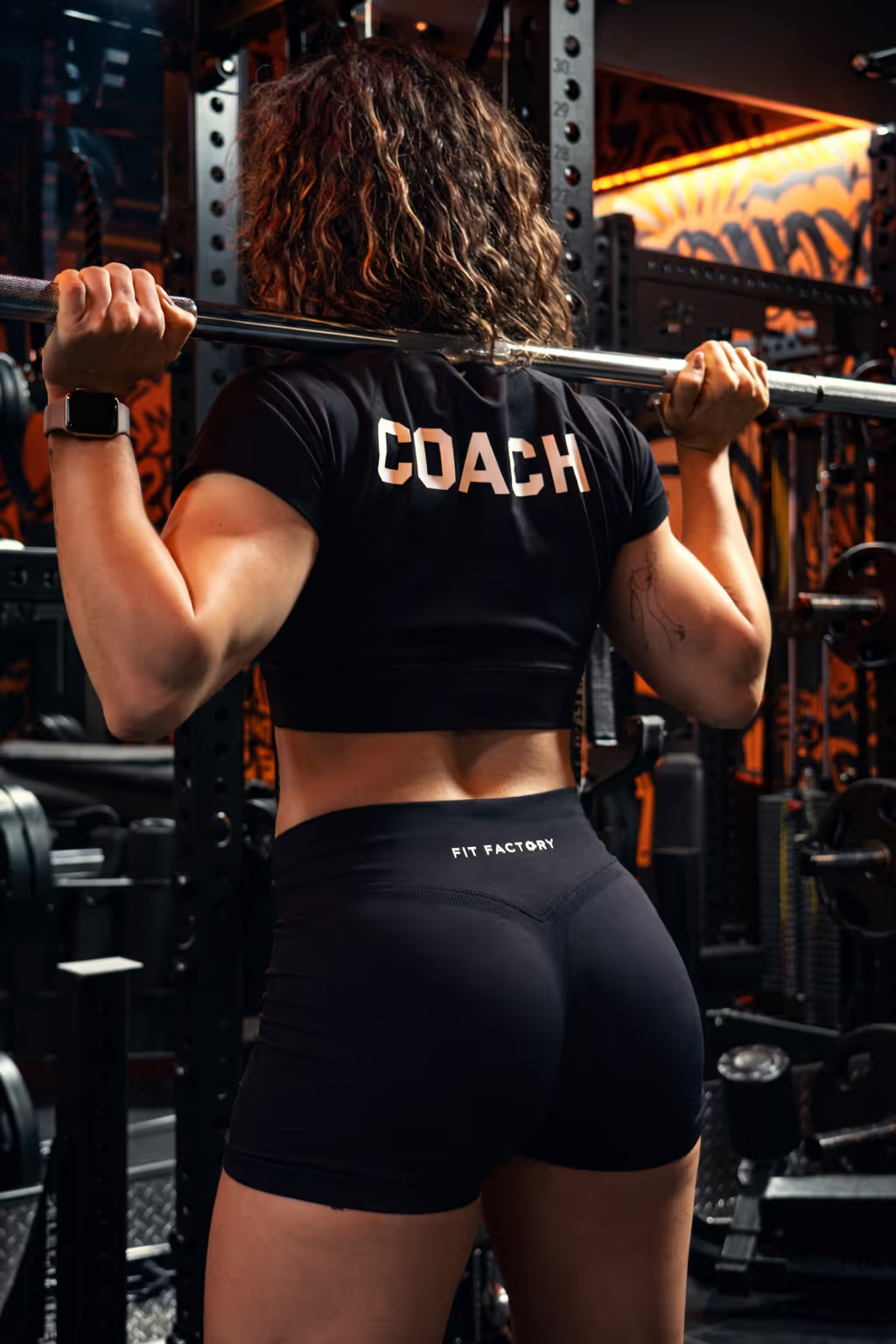
The Romanian deadlift (RDL) teaches the one skill every pulling-from-the-floor lift depends on: moving at the hips while your back stays still. Start with dumbbells or a barbell held at your thighs, knees softly bent.
Common fault: bending the knees more as you go down, or rounding to reach lower. If you feel it in your low back instead of your hamstrings, cut the range.
Progression: dowel hinge drill → kettlebell deadlift from a low box → dumbbell RDL → trap bar deadlift → barbell RDL and conventional deadlift. We'd usually go to the trap bar before a straight bar: the handles sit at your sides, so the start position is easier to find.
Dumbbells let each arm find its own path, which tends to suit the shoulders while you're learning, and they show you if one side is weaker.
Common fault: elbows flaring and shoulders rolling forward at the bottom. Go lighter until you own the position.
Progression: incline push-up → push-up from the floor → dumbbell bench press → barbell bench press. Add a standing overhead press once a week for your vertical push.
Brace one hand and knee on a bench, let the dumbbell hang, then row.
Pull your elbow to your back pocket, not your hand to your armpit.
Common fault: twisting your torso to heave the weight up. If your chest turns to the ceiling, go lighter.
Row progression: suspension-trainer row (feet further forward to make it harder) → chest-supported row → one-arm dumbbell row → barbell row.
Pull-up progression: band-assisted pull-ups → slow lowerings from the top (take three to five seconds to come down) → one strict rep → sets of three to five. Your first strict pull-up can take a while, so keep rows in the plan while you work toward it.
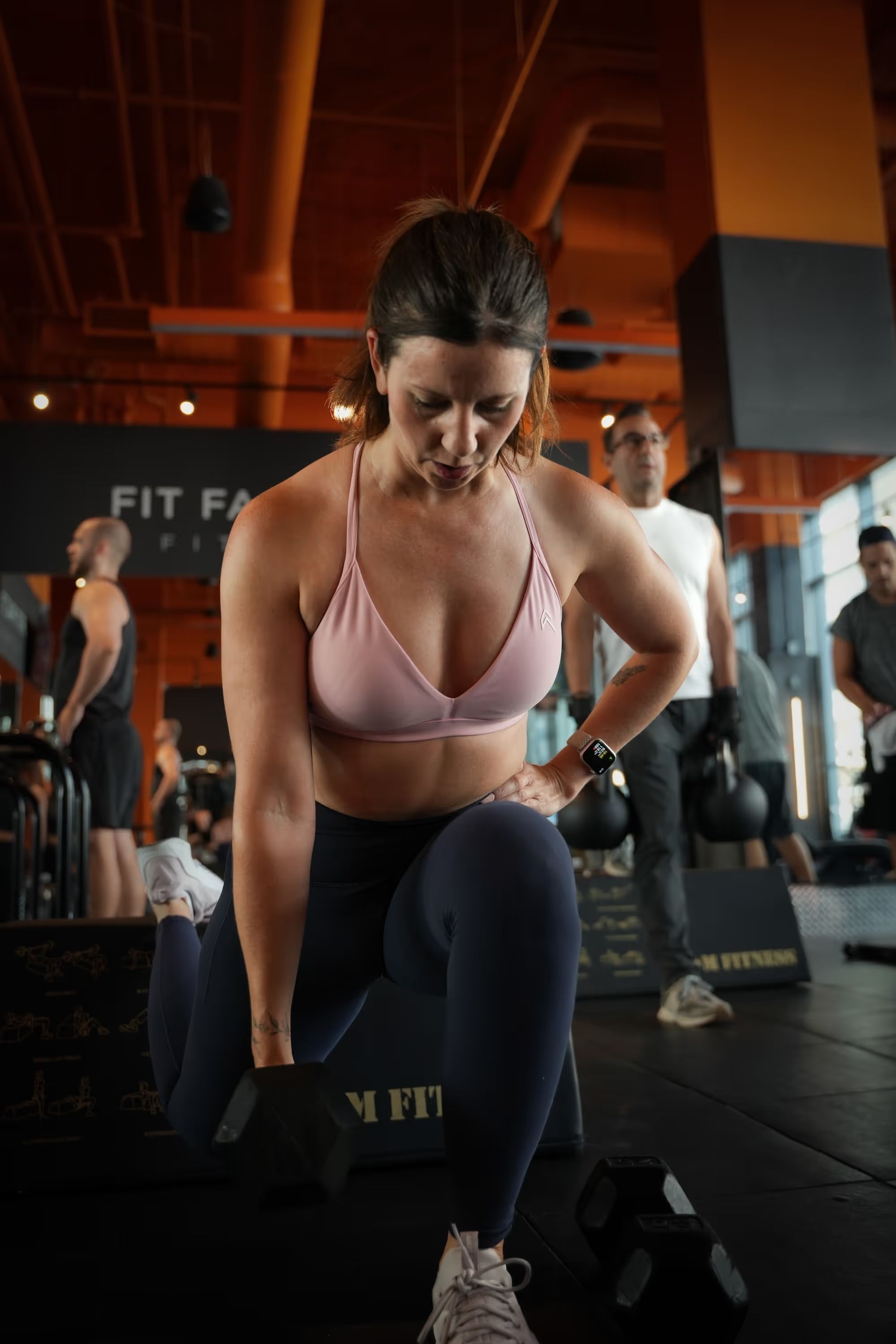
Stand in a long stride, back heel up, and lower your back knee straight down. Hold dumbbells at your sides or a kettlebell at your chest.
Common fault: too short a stride, so the front heel lifts and the knee takes all the load.
Progression: split squat holding a support → loaded split squat → reverse lunge → rear-foot-elevated split squat → walking lunge.
Pick up two heavy dumbbells or kettlebells and walk. It trains grip, upper back and trunk at once.
Common fault: leaning or shuffling as you tire. When posture goes, put the weights down.
Progression: farmer's carry with both hands → suitcase carry with one hand (your trunk has to fight a sideways lean) → heavier or longer carries.
RIR stands for "reps in reserve": how many more good reps you could have done when you stopped. RPE (rating of perceived exertion) is the same idea from the other direction. On the 1-to-10 lifting scale, RPE 10 means nothing left, RPE 9 is one rep left, and RPE 8 is two left.
You don't need to go to failure to get stronger. The American College of Sports Medicine's 2026 position stand on resistance training found that training to failure didn't consistently improve outcomes for the average healthy adult. Stopping a couple of reps short leaves you fresher for the next set and the next session.
Judging RIR takes practice. To calibrate, occasionally push the last set until form starts to slip and compare that with your guess.
Run it on non-consecutive days, like Monday, Wednesday and Friday, in about 50 to 60 minutes per session. Exercises paired with a letter (A1, A2) are done back to back: one set of each, then rest.
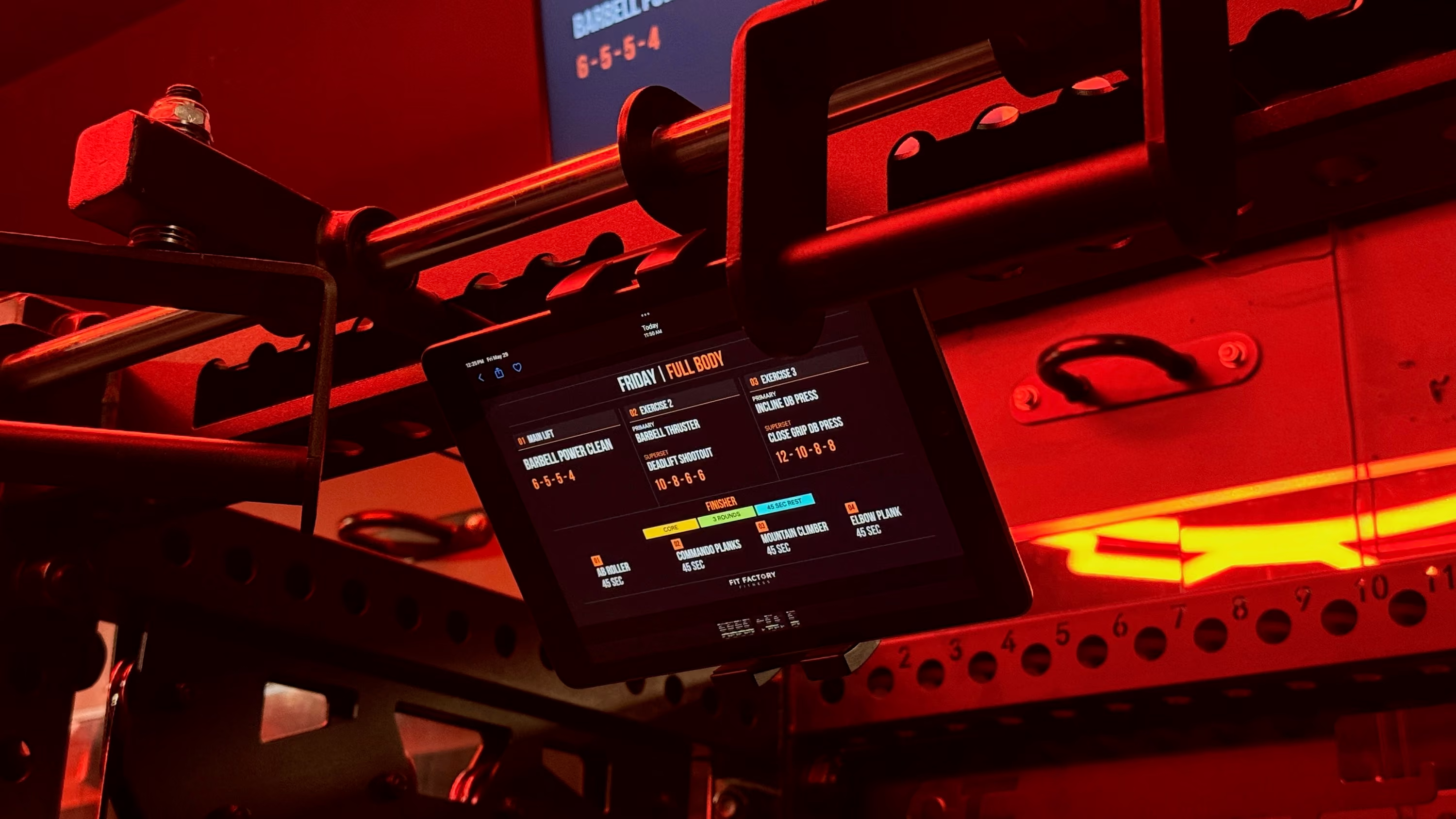
Use double progression: work up through the rep range first, then add weight.
Write down every set: the weight, the reps, and roughly how many reps you had left. If a lift stalls for three weeks, check sleep, food and stress first, then try a close variation for a few weeks.
The Canadian 24-Hour Movement Guidelines recommend that adults do muscle-strengthening activities using the major muscle groups at least twice a week, along with at least 150 minutes of moderate-to-vigorous aerobic activity. Adults 65 and over get the same strength recommendation, plus activities that challenge balance.
The ACSM's 2026 position stand agrees: hitting all major muscle groups at least twice a week matters more than finding a "perfect" plan. For strength it suggests 2–3 sets per exercise at around 80% of your one-rep max, which is where the 5–8 rep sets above end up.
So twice a week is the floor. We'd recommend three full-body sessions for most beginners and intermediates: more practice on each pattern, and a missed day still leaves you above the guideline.
If you have a medical condition, an injury or are pregnant, check with your doctor or a physiotherapist before you start a new strength program.
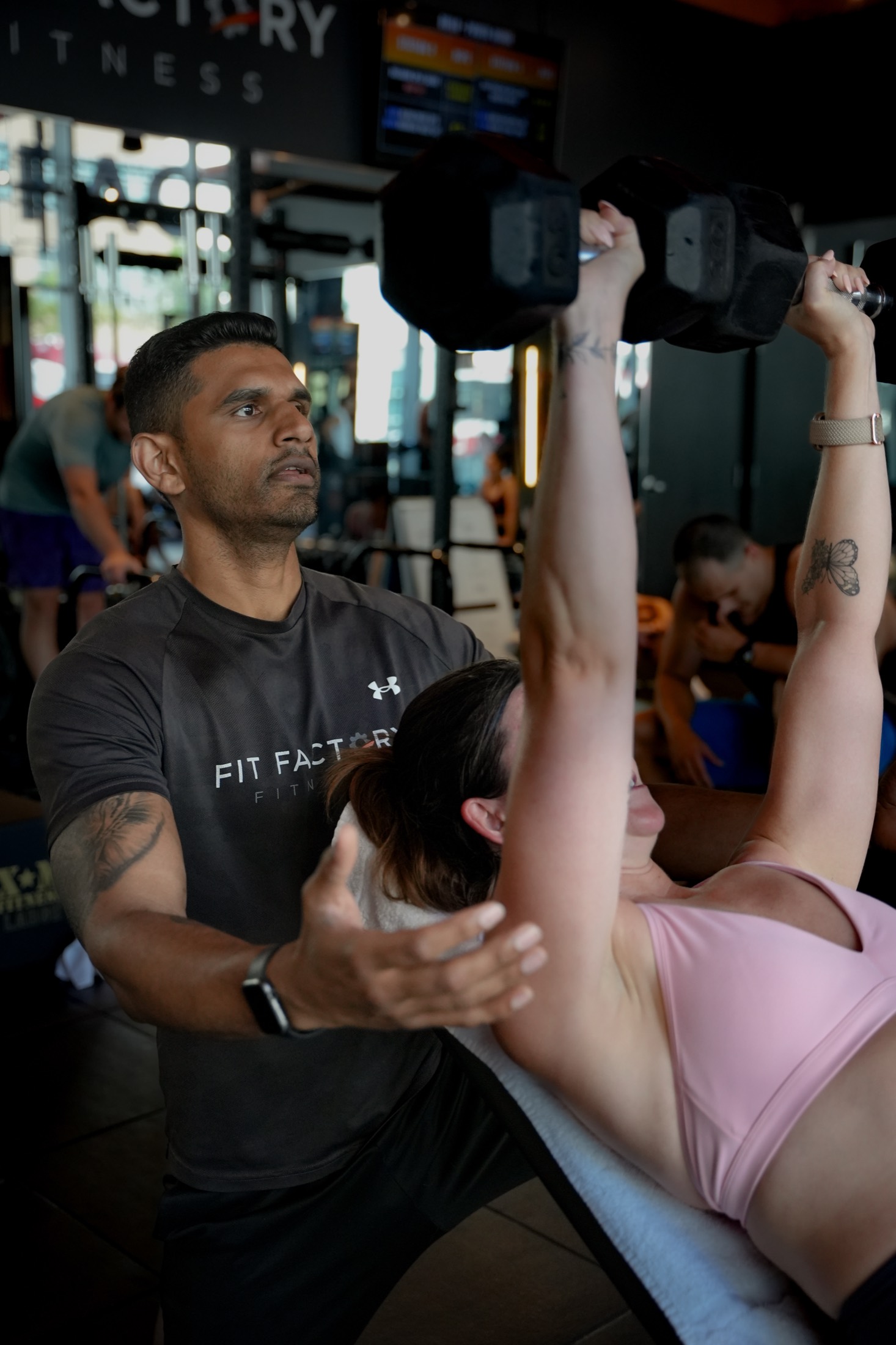
You can make good progress on your own. A coach is worth it when:
At Fit Factory there are two ways to get that. Our coach-led group classes include Build sessions (Full Body, Upper Body and Lower Body) where a coach runs the strength work and gives modifications for every level. If you want a plan written just for you, Personal Strength Coaching puts up to six people with one coach, each on their own program, with two or three coached sessions a week plus unlimited group classes.
Pick Day 1, choose weights that leave three reps in the tank, and write down every set. In two weeks you'll have real numbers to beat.
If you'd rather learn the lifts with a coach watching, try our intro week: unlimited group classes for one week at $39 + HST, at Downtown (373 King St W) or Midtown (161 Eglinton Ave E). Book a few Build classes and bring your questions.
Everything you need to know about memberships, HYROX training, personal coaching, group fitness classes, and getting started at Fit Factory Toronto.
Start Your 1 week TrialFit Factory gym welcomes new members of all fitness levels with strong, open arms. No matter your fitness level, we got you.